Interregnum · II
Life on the server
What a character can do, from the first day to holding a fief.
“Every trade needs another. The smith needs the miner, the charcoal burner and the tanner.”
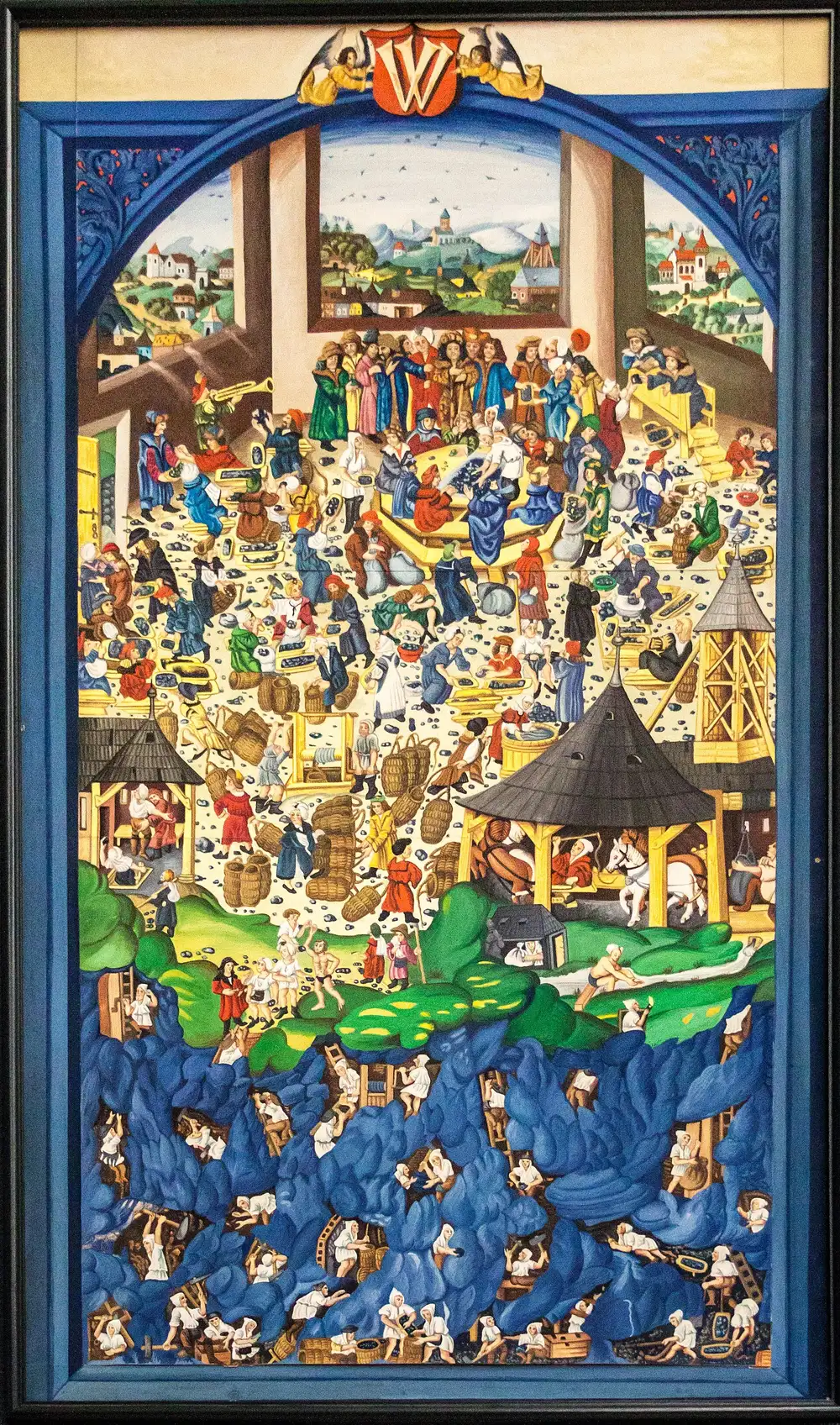
Behind: Silver mine, Kutná Hora. 15th century. Photo: Szilas. Public domain, via Wikimedia Commons.
This is what a character can do, as players meet it. Each part says whether it is on the test server now or planned for a later phase. Nothing here is final until the server opens.
Part 1 of 11
Your character
A background, a name you choose, a face from the game's own parts, and a stranger to everyone.
On the test serverYou make your character in a private scene before you arrive: a background, a name, a face built from the game’s own parts, and a description other people read when they look you over. Men and women can be played.
Nobody knows your name until you tell them. There are no names over heads: you introduce yourself, with your real name or any other, and people can keep their own name for you (“Remember as…”). A hood or a closed visor hides your face, and with it every name.
Each account has two characters. No coin or goods pass between them, and what one of them knows, the other doesn’t.
- Phase 3A barber who changes your looks
Part 2 of 11
Talking, and the book
Voice for talking, a book for what you own and know, and no commands to remember.
On the test serverYou talk by voice, to whoever is near enough to hear: a whisper, normal speech or a shout. Push-to-talk is a server rule.
Everything else is in menus. Your book (L) has a ribbon for each part of your life: yourself, your family, your holdings, your orders, your offices, the law, the Church, the news and the places you know. A ribbon only shows when there is something on it. Walk up to another player and press E to introduce yourself, ask them to marry you, or whatever your office lets you do with them. A button you can’t use yet says why, and where to go.
Something wrong? F7 sends a report to staff, out of character.
Part 3 of 11
Wounds, rescue and death
Beaten is not dead. Somebody carries you off, and the wound stays until it is treated.
On the test serverAt the end of a fight you go down instead of dying. Others can bind your wounds or carry you. If nobody tends you, a watchman comes for you after a while (near Sedletz, a monk), carries you off, and you wake at the infirmary. Outlaws and the accused wake in jail instead.
The blow that put you down leaves a lasting wound on that part of the body until the infirmarian treats it.
A character dies only by a finishing blow, by a court’s sentence of death, or by the player’s own choice. Every death dealt by another player is reviewed by staff before it is final.
How it works
When you lose a fight
Beaten is not dead. This is what happens next.
Struck down
At the end of a fight you go down instead of dying.
Tended
Another player can bind your wounds or carry you.
Carried off
If nobody comes, a watchman fetches you. Near Sedletz, a monk.
The infirmary
You wake there, and the infirmarian treats the wound you took.
Outlaws and the accused wake in jail instead.
A life ends only by a finishing blow, a court's sentence or your own choice, and staff review every death dealt by another player.
Part 4 of 11
Coin, traders and markets
Every groschen is real coin, struck at the Kuttenberg mint.
On the test serverCoin is real: every groschen is struck at the Kuttenberg mint, and it changes hands only when someone hands it over, loses it or has it taken. The Crown also keeps gold florins for large sums. You arrive with a few groschen.
NPC traders sell plain necessities, and not cheaply, so better goods come from other players. They buy from you too. On market day the village and town squares fill with sellers, and pedlars walk from village to village with their packs.
- Phase 2Stalls and shops run by players, and wages for hired work
- Phase 3Promissory notes and receipts
Part 5 of 11
Work and trades
Mine the silver that becomes coin, forge, brew, farm and build. No trade stands alone.
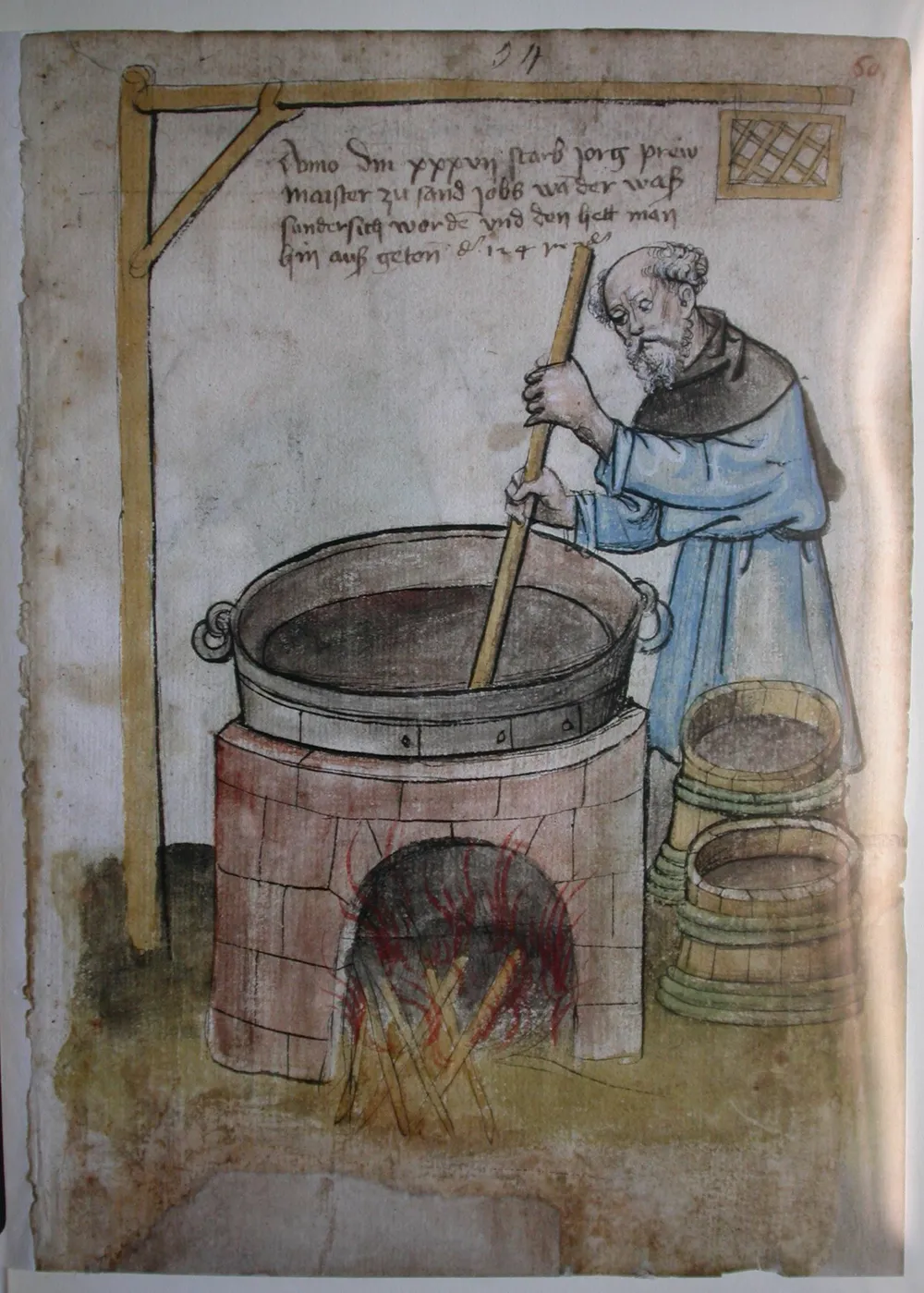
Planned, Phase 2Every trade is real work done in the world, step by step, at a workstation, with tools that wear and goods whose quality depends on who made them. Some work takes days: beer ferments and hides cure while you are away.
No trade is self-sufficient. The smith needs the miner, the charcoal burner and the tanner; the baker needs the farmer, the miller and the woodcutter. Silver ore cut by players becomes the coin everyone spends.
A newcomer always finds paid work: in the fields and woods of the settlers’ lordship, in the Crown’s mines, or as a lay worker at the monastery.
- Phase 4Apprentices, masters and the masterpiece
How it works
From ore to groschen
Planned for Phase 2: the only way coin comes into the world.
Mined
Miners cut silver ore underground.
Smelted
The smelter turns the ore into silver.
Assayed
At the mint, the silver is tested for purity.
Struck
The mint strikes groschen, the only coin there is.
Part 6 of 11
Houses and inns
Buy a house from the Crown's clerk, hold the deed and the key, and pay your dues.
On the test serverThe town hall clerk sells the Crown’s houses, and families sell theirs. The sale is written into the town book and you get the deed and the key; a smith can copy the key. A plain lock can be picked, a master’s lock can’t. You can sell again before the clerk.
You may own one home and any number of businesses. Every holding pays weekly dues to whoever holds the land, and a house left unpaid is taken back in the end. Furniture is made, bought, moved and placed.
Innkeepers let rooms by the night or by the week. Some buildings are never for sale: the churches and the abbey, the town hall, the guardhouses, the jail, the mint and the walls.
- Phase 4Claim a ruin and rebuild it in stages
Part 7 of 11
Crime and the law
Crime is allowed. Witnesses, guards, judges and the gallows answer it.
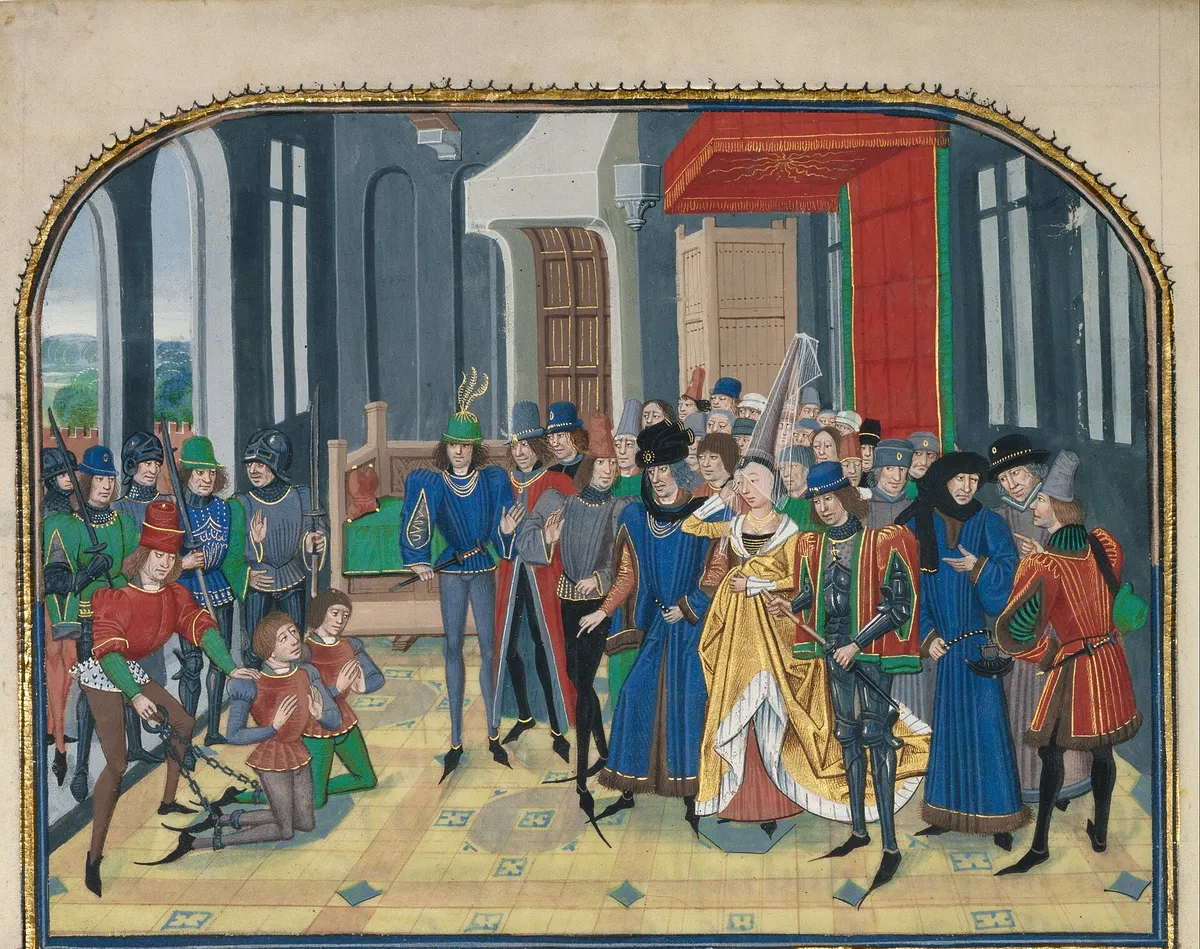
On the test serverYou may rob, steal, cheat and fight in character, and the world answers. People who see a crime remember what they saw: your clothes, and your face if they were close. Guards come in numbers that fit the crime. Roads and districts grow quieter or more dangerous with what happens there, and people change their habits.
Crimes are reported to a guard, a reeve or a bailiff and become cases. Judges are players who hold the office: the town court sits in Kuttenberg, the Crown’s court covers the rest of the Crown’s lands, lords judge in their own lordships and the abbey has its Church court. A summons goes up on the notice boards; whoever doesn’t come is judged in their absence.
Sentences are fines, paying back the victim, the pillory, the gaol, banishment and outlawry, and for the worst crimes death, which staff review first. Striking someone is an assault, though most people forgive one light blow if you say sorry in time.
- Phase 3The hue and cry, and bounties on outlaws
- Phase 3Seals and forgery
How it works
A crime, from the deed to the sentence
Crime is allowed. The world answers it, not the staff.
Seen
Whoever sees it remembers your clothes, and your face if they were close.
Reported
To a guard, a reeve or a bailiff, who writes up the case.
Summoned
The summons goes up on the notice boards.
Judged
A player judge hears it at the court. Stay away, and you're judged in your absence.
Sentenced
A fine, paying the victim back, the pillory, the gaol, banishment or outlawry.
Guards who see it come at once, in numbers that fit the crime.
Death is kept for the worst crimes, and staff review it first.
Part 8 of 11
Offices, letters and records
Power comes on sealed parchment. Reeves, judges, gaolers and captains are appointed in the world.
On the test serverAn office is given by a sealed letter of appointment, drawn up by a town hall clerk. Only the person it names can break the seal, and breaking it begins the office. Each office has its powers only where it holds them: a reeve in his own village, a judge in her own court. The office register at the clerk shows who holds what.
Most people can’t read well. Below a certain learning the written word comes out jumbled, as in the first game: notices, deeds, letters and wills. A priest or a monk can teach you letters, and a scribe writes a notice or a letter for a coin and reads documents to you for free.
Notice boards stand where the criers stand. They carry summons, the wanted, sales and anything a player pays to pin.
- Phase 2Registration with the clerk and the census of each village
Part 9 of 11
Families, the Church and Sedletz
Weddings with witnesses, wills, masses and confession, and a monastery with its own court.
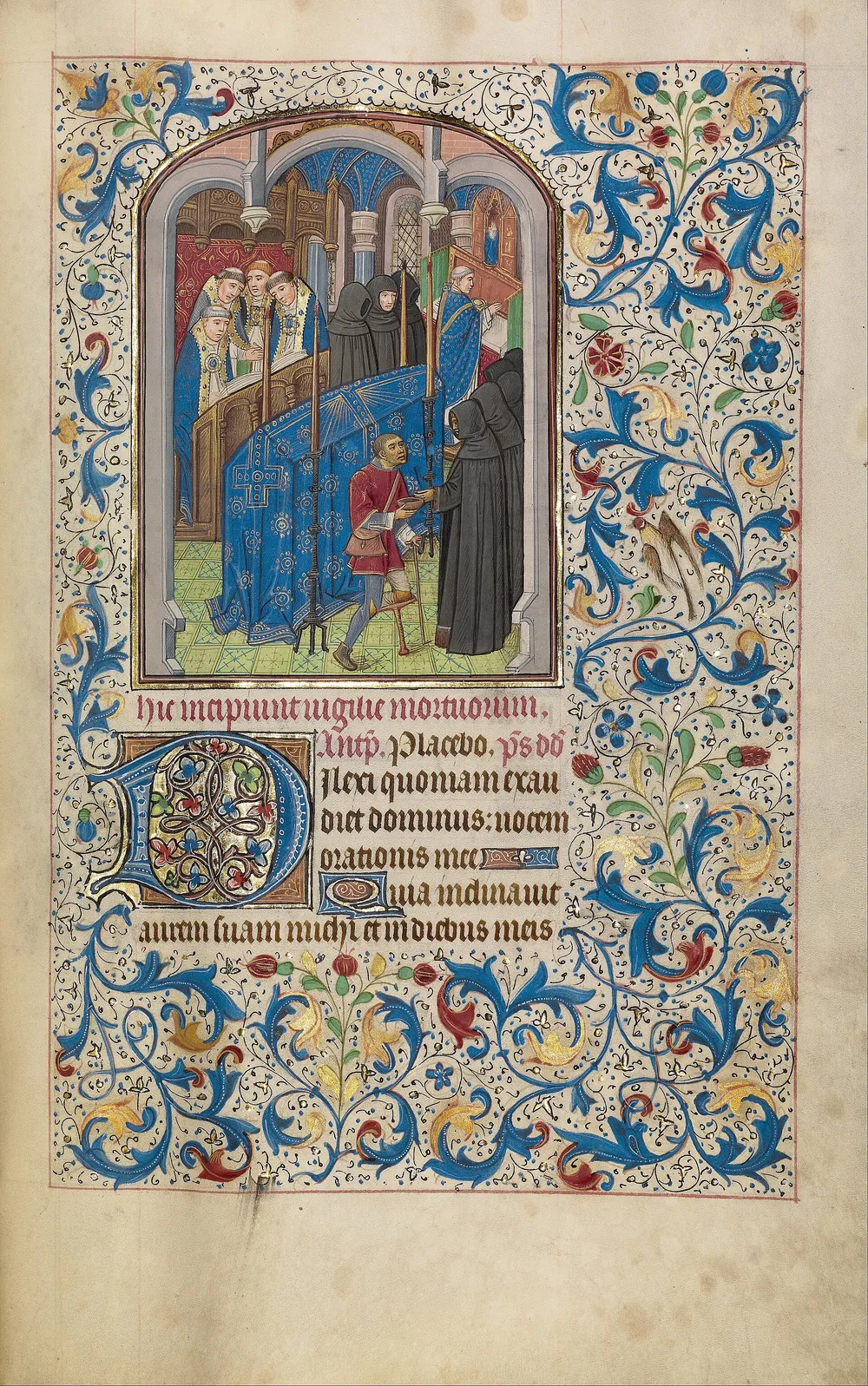
On the test serverTwo people marry before two witnesses, and the wedding goes into that place’s parish book. Families share a name and a home, and a will decides who gets what when someone dies. The dead are buried in a churchyard, and masses can be said for them. Confession is heard in a confessional, the parish priest asks for tithes, and the Church can excommunicate.
The bells ring the hours from every church and chapel, and Sunday is Sunday: the days of the week are the real ones.
Sedletz is a working Cistercian monastery, with its monks, its day and its bells. You can join as a novice and take vows as a monk. The Knights Hospitaller keep a house there, an order players join with its own ranks. Someone fleeing the law can claim sanctuary at the abbey.
- Phase 4Guilds, fencing brotherhoods and renown
Part 10 of 11
News and the roads
News travels at the speed of the courier. Caravans, carters and the coach use the same roads as the bandits.
On the test serverWhat happens somewhere reaches other places later, carried by couriers and travellers. Town criers call the news at the bells, and whoever hears a piece of news has it written in their book.
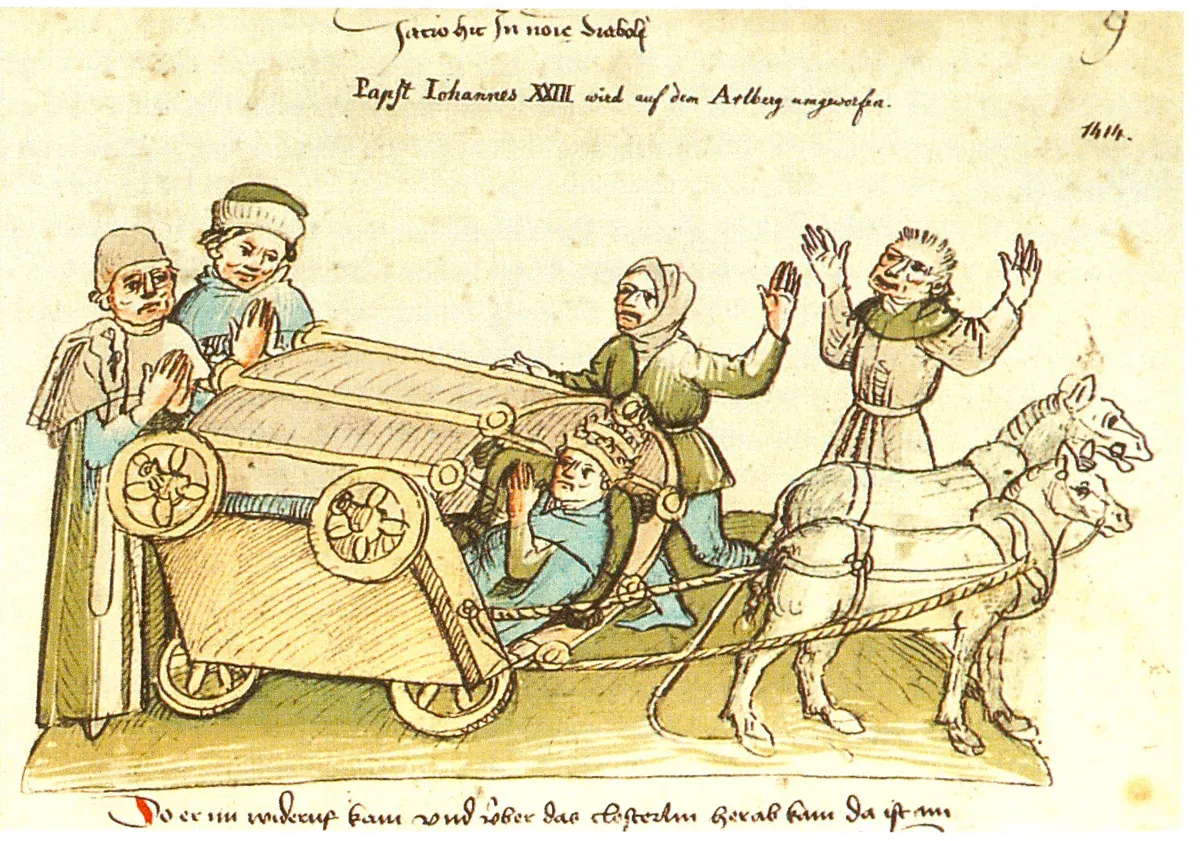
Caravans travel between the villages with guards riding along. A carter sends your goods from one inn to another, and the coach takes passengers for a fare. Pilgrims walk to Sedletz and pedlars walk everywhere. So do bandits, and lords keep toll-keepers where the roads cross into their lands.
- Phase 2Horses you own, and horse theft
- Phase 4Carts for players
Part 11 of 11
Lords and the Crown
Hold a lordship under charter, keep its treasury, and answer to the Urburer.
On the test serverA lord swears fealty at Kuttenberg and receives a sealed charter for a lordship: a seat, its villages and a treasury. The lord judges in the lordship’s court, sets the house dues and the tolls within the Crown’s limits, and keeps a steward who reads the accounts. A lord can hire patrols for the roads.
Coin moves between the seats as money shipments, by rider and escort, and a shipment can be robbed. Every week each lordship owes the Crown its share. When the Urburer calls a muster, the lordships send their men.
A lord who lets the roads go lawless, or stays away too long, is called to account and can lose the lordship.
- Phase 5Feuds, sieges, captives and peace